
How fast can sanitation equipment reach a disaster site?
Speed depends on what's already staged and how far the truck has to travel. A standard delivery truck needs about 60 feet of straight clearance behind it to set units down safely, so we ask about driveway and street layout before dispatch, not after. If your shelter site sits near Cedar Hills, 2.3 miles north, or out toward West Slope, 3.0 miles northeast, that's a short run. Requests from Tigard, 6.1 miles southeast, or Lake Oswego, 9.3 miles southeast, still move quickly, but tell us the address early. During an active emergency we prioritize emergency porta potty rental requests over routine swaps. A shelter running on generator power should also confirm whether the site can support a temporary power pole or a light tower rental for nighttime access to restrooms. We coordinate directly with whoever is managing the response, whether that's a church running a shelter, a contractor on cleanup, or a city department coordinating relief. For agencies managing hand-labor crews doing debris removal, note that OSHA 1928.110 sets field sanitation expectations at one facility per 20 employees, reachable within a quarter mile walk, which matters when crews are spread across a damaged neighborhood in Beaverton.
What sanitation equipment works best for disaster response?
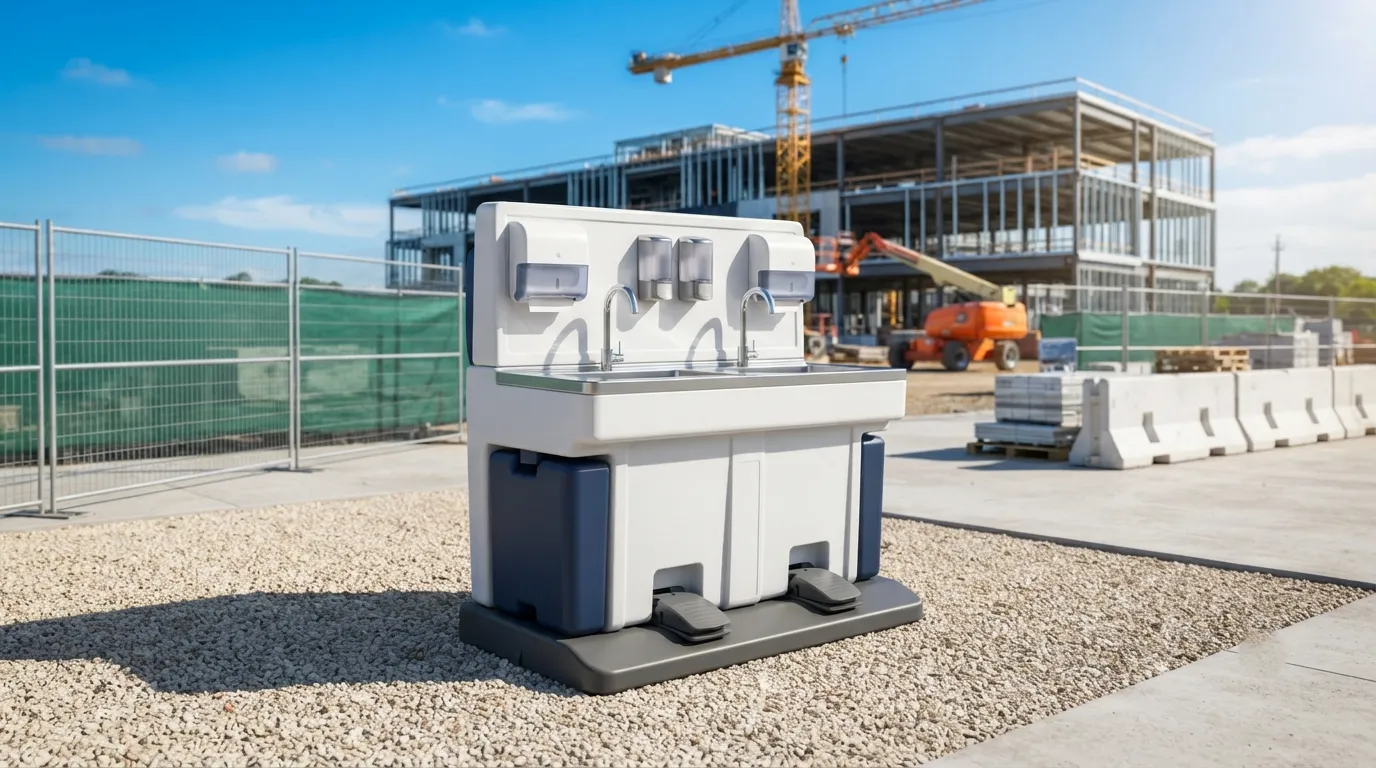
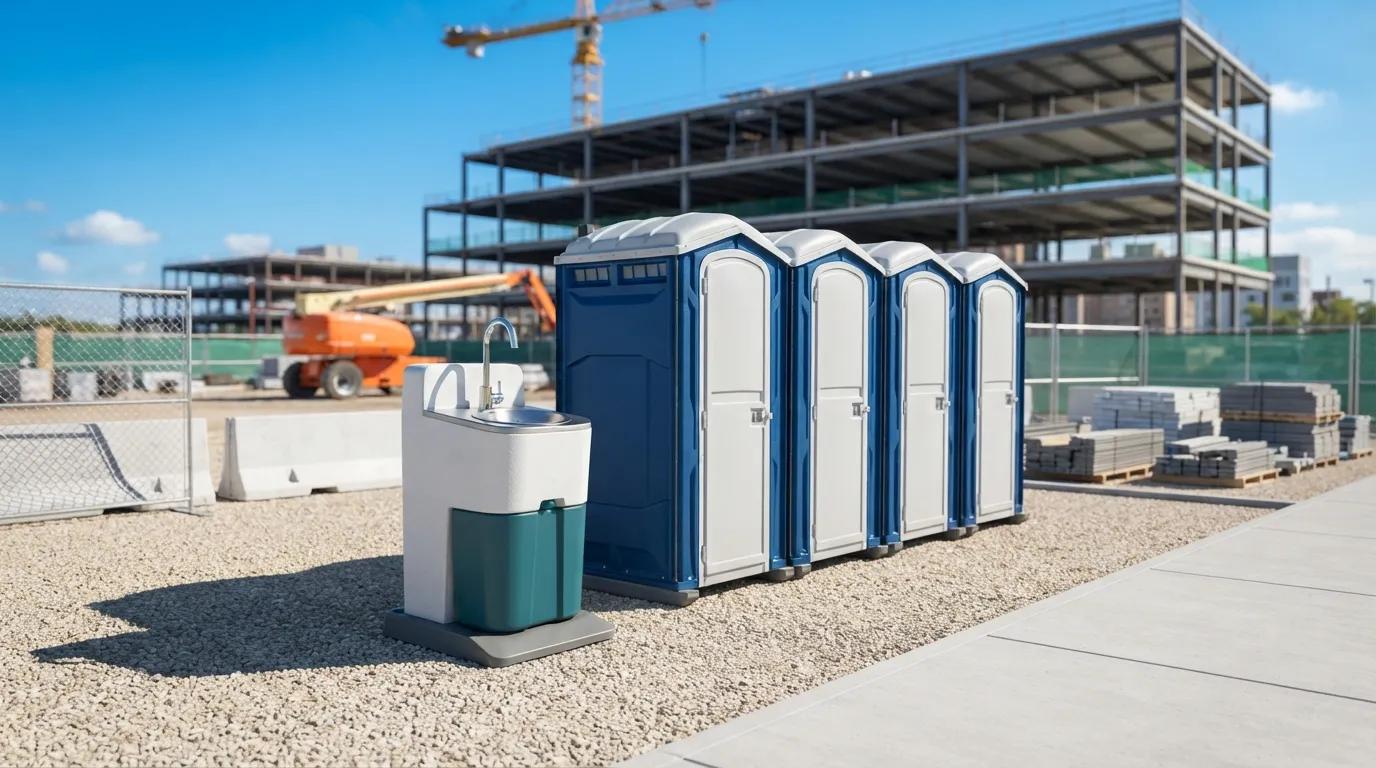
Shelters and staging areas usually need a mix, not one unit type. Standard units cover general population needs at day rates in the 100 to 350 dollar range, useful when you don't yet know how long the response will last. If the response stretches past a few days, weekly pricing on standard porta potty rental evens out the cost. For a shelter serving 50 or more displaced residents, OSHA 1926.51(c) construction ratios are a reasonable planning baseline: one toilet for 20 people or fewer, then one toilet and one urinal per 40 as headcount climbs. Water access matters just as much as toilets. OSHA 1926.51(a)(1) requires an adequate supply of potable water at any staffed site, so a handwashing station rental or a portable sink rental belongs next to every restroom cluster, not off in a supply tent. Per 29 CFR 1910.141(d)2), those stations need soap and towels or a hand-drying device; hand sanitizer alone doesn't satisfy that requirement, which matters when disease control is already a concern after flooding. Shelters need accessible units too. ADA Standards section 213.2 requires at least 5 percent of clustered single-user units be accessible, never fewer than one, so any deployment of five or more units should include an ADA accessible porta potty. If plumbing is down at a shelter building itself, a holding tank rental can keep existing fixtures functional until sewer service returns, and a restroom trailer rental gives higher-traffic shelters flush toilets and running water without waiting on repairs.
Where should disaster relief units be placed on site?
Placement follows the same logic as any large site, just under worse conditions. Ground needs to be level and stable, matching ADA Standards section 302.1's requirement that surfaces be firm and slip resistant, which is harder to guarantee after flooding softens ground or debris covers walkways. Keep a 36 inch clear path per ADA Standards section 403.5.1 to every unit, and route that path around downed limbs, mud or standing water rather than through it. If the shelter is fenced or the site needs crowd separation from active cleanup zones, a temporary fence rental or chain link temporary fence keeps displaced residents away from hazards without slowing access to restrooms. Debris removal often runs alongside shelter operations, and that debris has to go somewhere: a roll-off dumpster rental staged on site keeps storm debris from piling up near where people are sleeping and eating. Weekly dumpster rates run 426 to 778 dollars, which tends to fit a multi-day response better than daily rates stacked one on top of another. If the response includes an incident command post or a temporary shelter office, a mobile office trailer rental or storage container rental gives coordinators a dry, lockable space for supplies and paperwork. For general placement questions beyond a disaster context, our porta potty placement guide covers routine setup logic that still applies.
How many units does a shelter or staging site actually need?
Headcount drives the number, not square footage. Use the how many porta potties do I need guide to size a deployment once you have a rough population estimate, and expect that number to shift as displaced residents arrive or leave over the first 48 hours.
Can Beaverton Porta Pros deploy on short notice, day or night?
Yes, disaster response doesn't wait for business hours. Call as soon as you know units are needed. We stage inventory specifically for this kind of demand and prioritize confirmed emergency requests over scheduled routine service across Beaverton.
Does insurance or FEMA reimbursement cover this rental?
That depends on your policy or the specific disaster declaration, not on us. Keep your invoices and delivery records; most agencies and insurers ask for dated paperwork. We provide standard receipts for every request a quote order.
What happens if flooding blocks delivery truck access?
We'll work with you to find an alternate placement, since our trucks need roughly 60 feet of clear straight approach. If the primary site is unreachable, we place units at the nearest accessible point and note the detour on the delivery record.
Do you provide handwashing stations without a restroom order?
Yes, standalone hand sanitizer station rental or plumbed handwash units can deploy without a toilet order attached, which is common at feeding sites and supply distribution points.
How long can equipment stay on site during an extended response?
As long as needed. Monthly standard unit rates run 125 to 325 dollars, which is usually more economical than repeated short-term orders once a response passes the two-week mark.
Who do I contact to set this up right now?
Reach us through contact or request a quote, and mention it's a disaster response so we can flag priority dispatch immediately.
Next step
Get a delivery date
Tell us the address, the dates and the headcount. We size the order and confirm the route.